Ghost Hunter: A Ghost of Gaming Past
While it has become popular to emulate the aesthetics and sounds of old SNES and Gameboy games for nostalgia’s sake, it’s harder to emulate the simple brilliance of these games. With minimal resources, game developers were able to create challenging experiences with simple objectives that are seldom seen in more modern gaming. Created by Róger Goulart, Ghost Hunter is a game that strikes that rare balance of retro graphics and old-fashioned gameplay. The result is a delightful and charming puzzle game experience with a spooky coat of paint as the cherry on top.
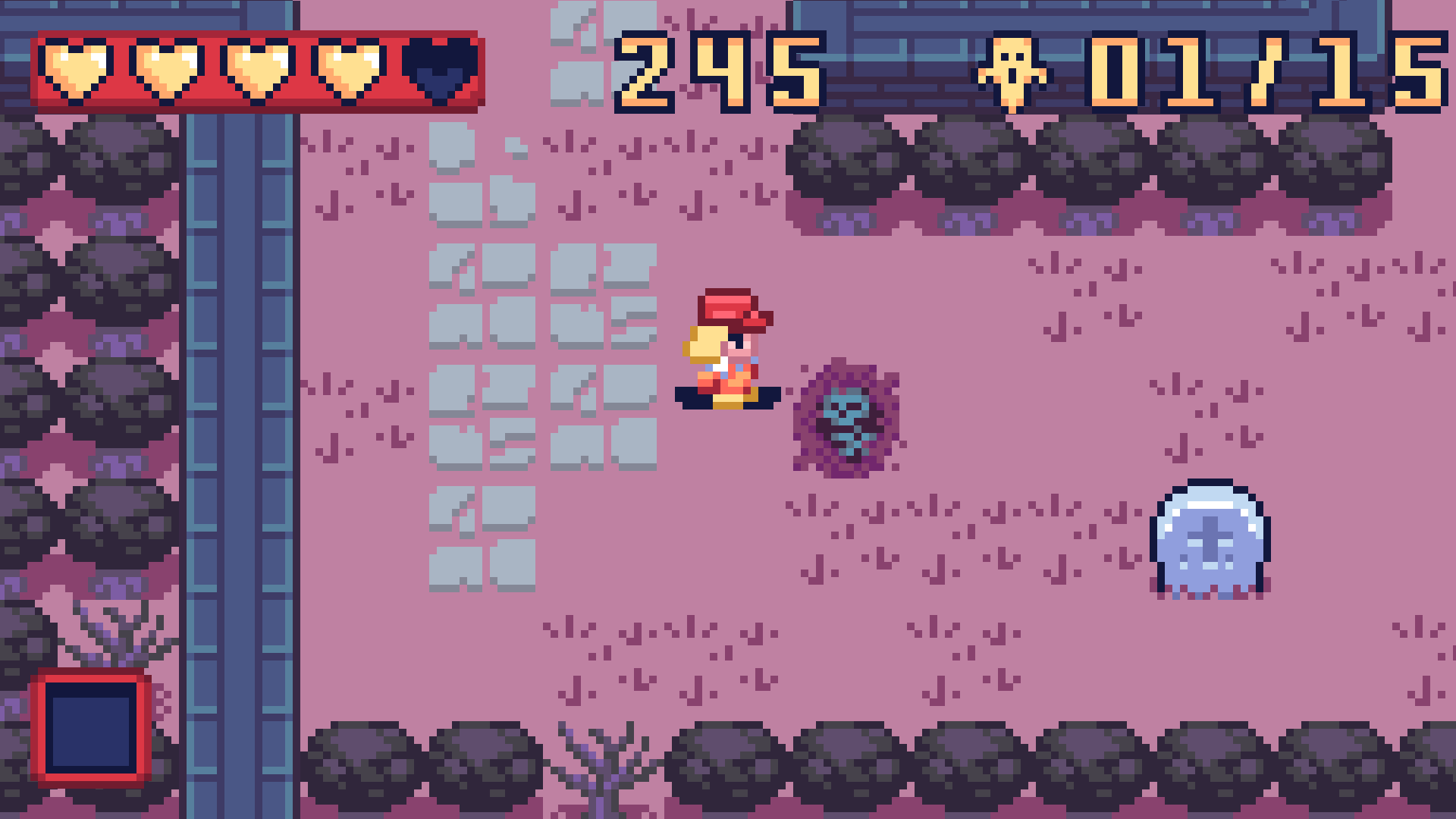
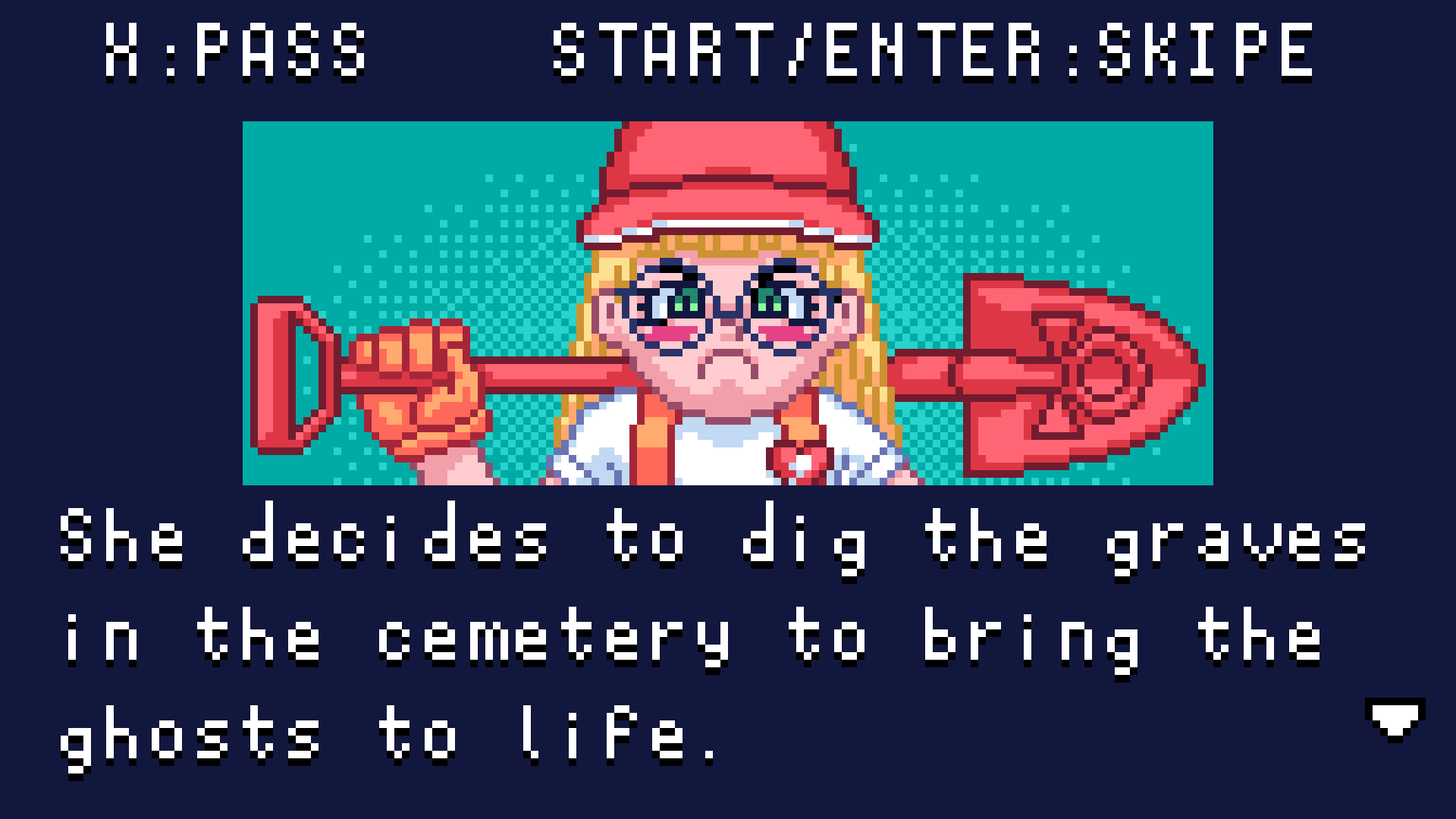
From a plot standpoint, Ghost Hunter establishes a loveable protagonist on a noble quest in only a few lines of text. The story of Glenda, a ghost-loving outcast, is told in just a few stills and lines of text, but her simple enthusiasm for the undead is still palpable in the limited story provided. She loves ghosts and wants everyone else to know just how much she loves them. Graphically, everything is very readable and crisp. Glenda’s sprite is cute and distinguishable, and the ghosts are easy to identify as friends or foes. That, coupled with the catchy soundtrack, makes Ghost Hunter a game that truly does feel as if it comes from a different era.
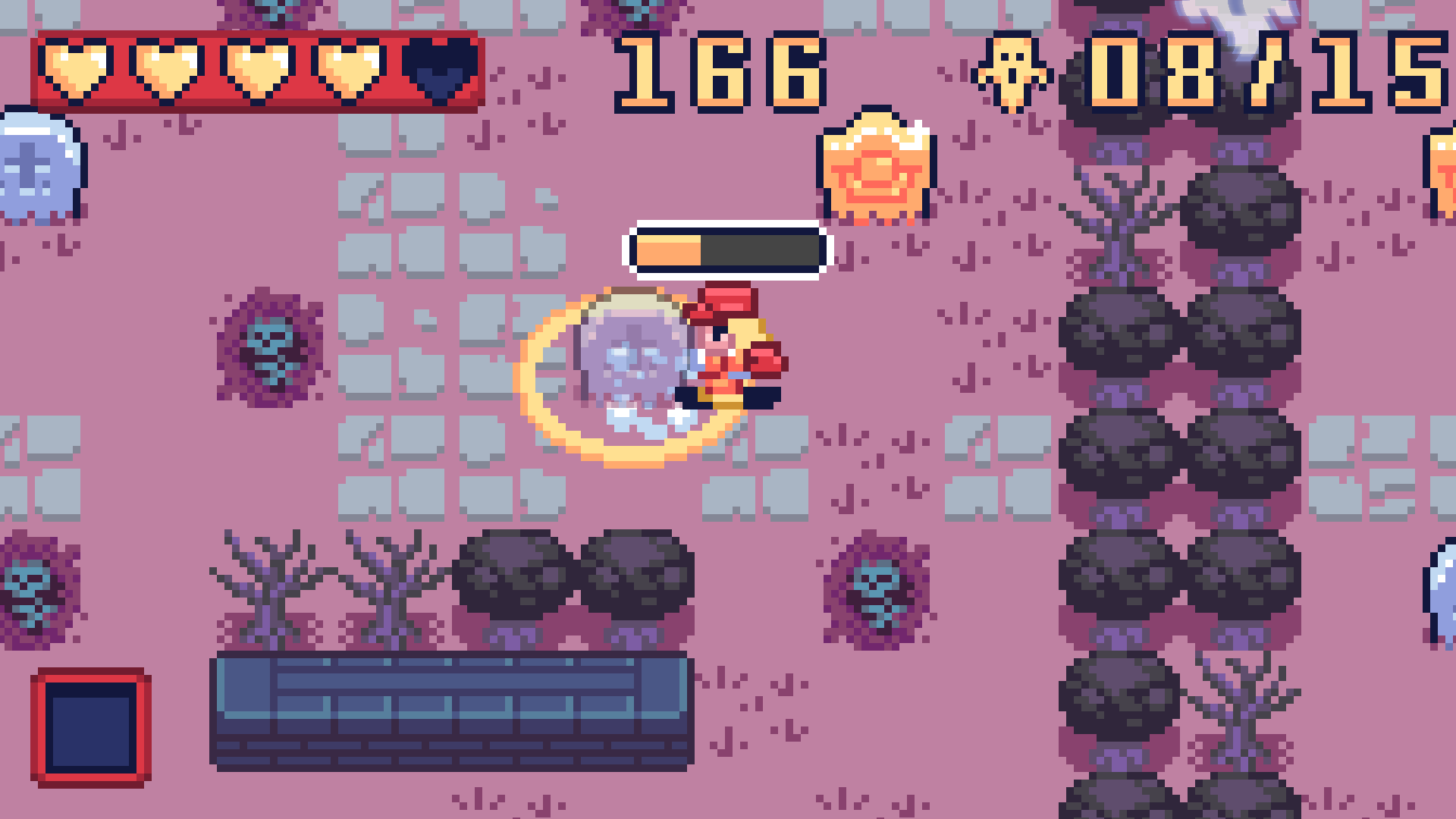
All of these elements are only enhanced by the smooth gameplay. Ghost Hunter is a top-down experience in which the player uses WASD to control Glenda through several graveyards. Your timed objective is to dig up graves and free the good ghosts on each map. There are also cursed ghosts who can attack Glenda, so it’s important to explore carefully and be ready to run away at a moment’s notice while digging up a grave. It’s simple in concept, but the time limit, variation of enemies, and digging mechanics make it complex in execution. On some levels, it’s smarter to start digging one grave, leave it for a bit, and come back to it later to ensure you don’t get slowed down by any cursed ghosts. The ways in which such a simple game can evolve into something strategic give merit to the power of minimalism in the retro game genre.
While it starts simple, the later levels are more difficult, thanks to the variation in enemies. A new type of ghost that needs to be defeated by water and bats who fly across the screen give another level of complexity to the established gameplay loop. Thankfully, the game also provides you with power-ups that are found in the golden graves, such as a speed boost and a light that slows the ghosts down. They add an element of strategy as the player is forced to consider resource management in their ghost-hunting adventure.
When the player finally beats the third level, and Glenda has achieved her goal of freeing the ghosts from their graves, things obviously don’t go well. It’s a very straightforward result, and in a way, the story acts as a metaphor for the game’s own simplicity. At its core, Ghost Hunter is a simple pixel-art game about digging up ghosts, and it never tries to introduce any concepts or gameplay mechanics that detract from what it aims to be. While what Ghost Hunter does is great on the surface level, it’s what the game doesn’t do that makes it a loveable and memorable gaming experience.